
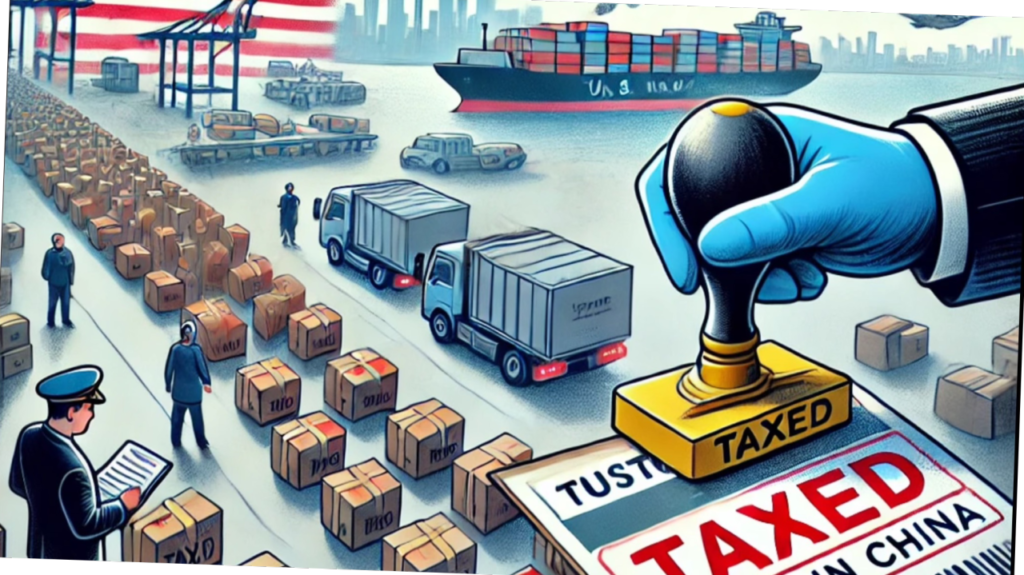
Trump’s new tariff policy targets small parcels from China, ending the duty-free benefit under Entry Type 86 (T86). This change will impose customs checks and taxes, slowing shipments and raising costs. While the U.S. has temporarily delayed enforcement due to logistical challenges, Chinese e-commerce businesses face an uncertain future. American consumers may have to choose between higher prices or longer wait times, while Chinese sellers scramble to adapt by setting up U.S. warehouses. Once fully implemented, this policy could reshape global e-commerce
You’ve probably heard that former U.S. President Donald Trump threatened tariffs on Canada, Mexico, and China. However, among these tariff policies, the suspension of Entry Type 86 (T86) for shipments from China and Hong Kong has had the most significant impact on reshaping Chinese e-commerce.
What Is T86?
T86 is a provision under Section 321 of the Tariff Act of 1930, also known as the de minimis value rule. This policy allows shipments valued under $800 to enter the U.S. duty-free through simplified customs procedures. It has been crucial for e-commerce, as it reduces customs costs and clearance times. Over the past decade, Chinese e-commerce businesses have built billion-dollar operations based on this rule.
In 2023 alone, shipments worth $54.5 billion entered the U.S. under this provision, with 60% originating from China. Major Chinese e-commerce platforms, such as Shein and Temu, have relied heavily on T86 to ship goods efficiently to American consumers. By 2024, more than 1.3 billion packages entered the U.S. under this rule, with Shein and Temu accounting for nearly one-third of the total volume.
The Impact of Trump’s Tariff Policy
Under Trump’s new tariff plan, small parcels from China will now be subject to customs checks and taxes, significantly prolonging the clearance process. This policy shift is expected to have a major impact on both American consumers and Chinese e-commerce businesses.
• For Consumers: Many Americans still want to buy inexpensive products from China, but will they be willing to pay higher prices and wait longer for deliveries? Or will they turn to alternatives from other countries, even at higher costs?
• For Companies Like Shein and Temu: These platforms have invested billions in capturing the U.S. market. If they continue shipping the same way, they risk losing their competitive edge. To adapt, both companies have already encouraged their Chinese suppliers to set up local warehouses in the U.S., offering significant support to sellers who stock goods domestically. However, this presents new challenges, such as inventory management and warehousing costs.
Temporary Suspension of T86 Cancellation
On February 8th, the U.S. government announced a temporary suspension of the T86 cancellation for China and Hong Kong. The reason? The U.S. Customs and Border Protection (CBP) is currently unable to handle the massive influx of parcels, leading to airport congestion and delays.
However, once CBP is fully equipped to manage the increased volume, the restrictions on T86 are expected to be enforced—bringing tough times for Chinese e-commerce companies.
The question remains: how will they adapt when the new policy takes full effect?