
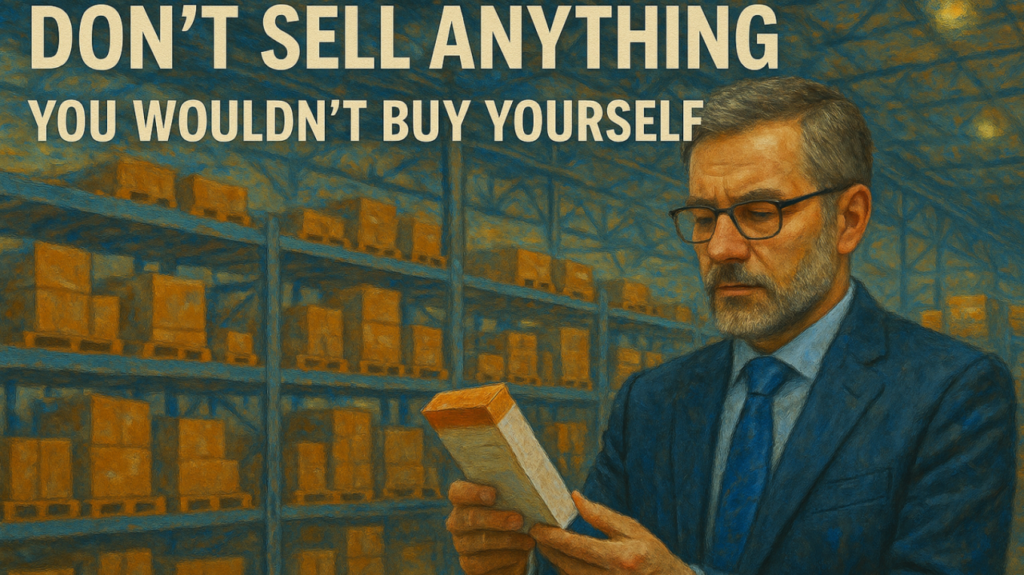
After 35 years in B2B sales, there’s one principle that has stood the test of time: Don’t sell anything you wouldn’t buy yourself. It sounds simple, even obvious – but in practice, it’s one of the most demanding standards you can set for yourself in business.
In B2B, you’re not just selling to a customer; you’re enabling them to succeed with their customer – the end consumer. That consumer ultimately decides whether your product is worth it. That means that success in B2B is never just about building a good relationship with the buyer sitting across the table. It’s about understanding the market beyond then – how the product will perform, how it will be received, and how it fits the real-world expectations of the consumer.
This approach requires a mindset shift. Instead of focusing solely on the immediate transaction, you must zoom out and think about the entire value chain. You’re not just making a sale – you’re helping build a sustainable business for your customer. And their success hinges on the consumer having a positive experience with what you’re selling. That includes the design, the price, the packaging, and every other element you might have learned about in business school. But theory only takes you so far. In reality, this is a long-term skill that requires empathy, integrity, and experience.
Empathy is especially key. You need to be able to put yourself in your customer’s shoe – not just metaphorically, but practically. Ask yourself: If I owned this business, would I stock this product? Would I display it proudly? Would I believe it adds value? If the answer is no, then why would you expect your customer to do it?
Even more challenging: sometimes doing right by the consumer means disagreeing with your customer. If you believe a decision isn’t in their best interest – or more importantly, won’t serve the consumer well – you need to be willing to speak up. That’s not easy, especially when there’s money on the line. But long-term trust comes from honesty, not convenience.
This also means being brutally honest about your own offering. Ask yourself: Is what I’m selling better than what the competitor is offering? Not just marginally different – better for the consumer, and therefore better for your customer. If it’s not, then what are you going to do about it?
After three and a half decades, this is the core lesson: Always act as if the business is yours. If you wouldn’t buy it, stock it, or promote it in your own store, don’t sell it. This mindset builds trust, creates lasting partnerships, and ultimately leads to success for everyone involve – especially the one who matters most: the end customer.
So, to anyone starting out – or even those years into their B2B journey – take a moment to reflect: Would you buy what you’re selling? If the answer is yes, then you’re on the right path.